

The Tradition of the Lucky Grapes in Spain: History and Significance
Every 31st of December, as the clock strikes midnight, millions of people in Spain prepare for a ritual that symbolises hope, wishes, and luck: eating twelve grapes to the chime of the bells. This custom, which is now an intrinsic part of Spanish culture, has a curious history that mixes tradition, marketing, and superstition.


Origins of the Tradition
The tradition of eating twelve grapes during the New Year's Eve bells has not always been part of Spain's New Year's celebrations. Its origins date back to the 19th century, a period when the customs of the upper classes and social events in large cities began to shape popular traditions.
French Influence and High Society
In the 1880s, the Spanish bourgeoisie and aristocracy adopted the French custom of celebrating the New Year with champagne and grapes. The grapes symbolised prosperity and abundance, and the act of including them in their banquets reflected a desire to attract good fortune in the year ahead. However, this practice was restricted to the most privileged due to the cost of the grapes and the exclusivity of the gala dinners.
Tradition Becomes Popular
At the turn of the century, a confluence of factors led to this tradition becoming democratised. In 1909, grape farmers in the Alicante region faced a particularly abundant harvest. Seeking a creative way to offload the surplus, they began to promote the idea of eating twelve grapes to the chime of the bells as a way to say goodbye to the year and attract good luck. This marketing coup was so successful that the custom quickly spread throughout Spain.
The Twelve Grapes Ritual
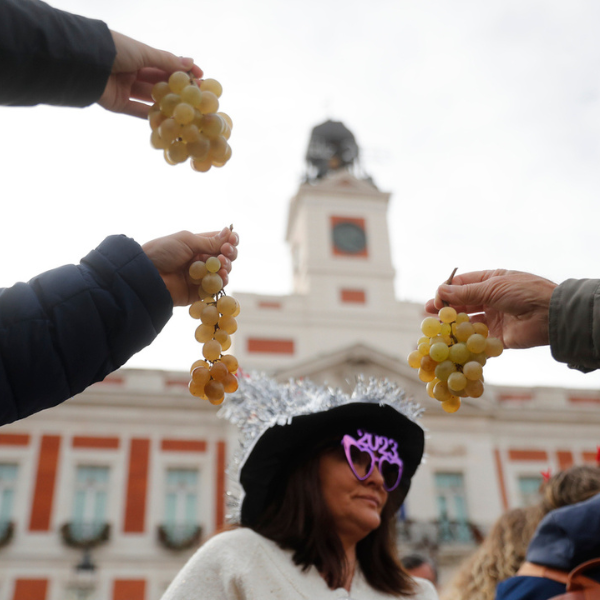
Nowadays, the ritual is deeply ingrained in the celebration of New Year's Eve in Spain. The grapes are eaten one by one, to the rhythm of the twelve chimes that mark the clock at midnight. Each grape represents a wish or a purpose for each month of the coming year. Although the moment may seem simple, it is an act laden with symbolism and, for many, superstition.
Preparations and Rules
The process of eating the twelve grapes isn't as easy as it seems. The grapes need to be ready before the chimes begin, and some families even opt to peel them and remove the seeds to make the process easier. Others prefer small grapes to avoid choking and keep pace. Timing with the chimes is essential: each one represents a month of the year, and failing to observe the ritual is perceived as a bad omen.
The Chimes at the Puerta del Sol
One of the epicentres of this tradition is the Puerta del Sol in Madrid. For decades, this iconic location has been the main stage for the New Year's Eve chimes in Spain. Thousands of people gather every year in front of the clock to celebrate the start of a new year together, while millions more follow it live on television.
Symbolism and Superstitions
The tradition of the twelve grapes is steeped in symbolism. Beyond being a simple festive act, the grapes represent wishes for prosperity, health, love, and happiness. Eating them in order and without interruption ensures, according to popular belief, that the coming year will be filled with good luck.
Regional Variations
Although the main custom is maintained throughout the country, some regions have added their own nuances. For example, in Catalonia, some families accompany the grapes with cava, while in northern Spain it is customary to eat local grape varieties. In the Canary Islands, due to the time difference, the chimes are celebrated an hour later than on the mainland, but the ritual remains the same.
Grapes of the World
The tradition of the twelve grapes has also crossed borders and is celebrated in some Latin American countries such as Mexico, Peru and Argentina. In these places, the grapes maintain their symbolism of good luck, although they have adapted to local customs.
Contrasts with Other Traditions
Although the tradition of eating grapes is very popular in Spain, other countries have different ways of celebrating the arrival of the New Year. In Italy, for example, people eat lentils to bring good fortune, whilst in Denmark they smash plates outside the doors of friends and family to symbolise good wishes.
The Evolution of a Tradition
As time has passed, the tradition of the grapes has adapted to cultural and technological changes. In the digital age, many people share their celebrations on social media, and supermarkets offer pre-prepared grape options to facilitate the ritual. Despite these modernisations, the essence of the tradition remains the same: to bid farewell to the old year with optimism and to welcome the new one with hope.
Conclusion
The tradition of the twelve lucky grapes is much more than a simple New Year's Eve ritual in Spain. It represents a unique blend of history, culture, and superstition that unites generations and regions in an act loaded with symbolism. In an increasingly globalised world, this custom remains a reminder of the importance of traditions and of humanity's capacity to find hope and connection in small gestures. After all, eating twelve grapes to the rhythm of the bongs is not just a way of welcoming the new year, but also a way of reaffirming the identity and unity of a people.


