

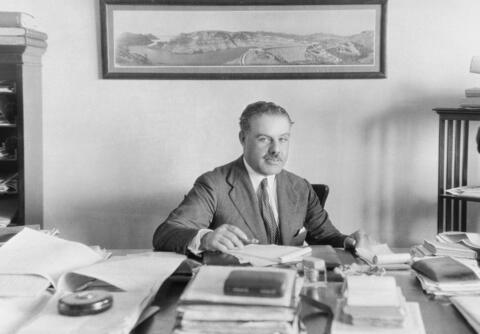
In the vast landscape of civil engineering and infrastructure history in Spain, few names resonate as strongly as that of Rafael Benjumea y Burín, Count of Guadalhorce. Born in Seville in 1876, Benjumea left an indelible mark on the history of Spanish engineering, being the architect of some of the country's most emblematic works. Without a doubt, one of his most outstanding contributions was his fundamental role in the construction of the famous Caminito del Rey, a walkway that has captured the imagination and respect of adventurers and tourists alike.
Training and First Steps in Engineering
Rafael Benjumea studied civil, channel, and port engineering, a discipline that allowed him to combine his interest in mathematics and physics with his passion for improving his country's infrastructure. His training provided him with the necessary tools to tackle complex technical challenges, and his innovative spirit led him to seek solutions that were not only functional but also aesthetically impressive and sustainable in the long term.
The El Chorro Hydroelectric Project
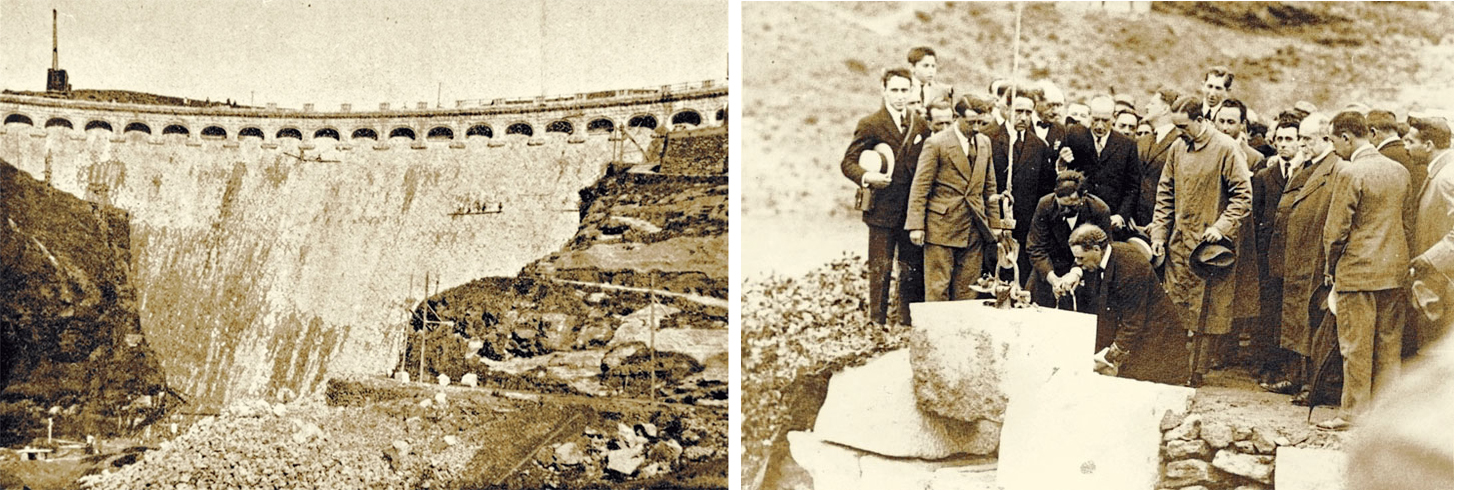
The work that would cement his legacy began to take shape in the early 20th century with the El Chorro hydroelectric project, located in the province of Málaga. This project's main objective was to harness the flow of the Guadalhorce River to generate electricity, a crucial resource for the industrial and economic development of the region. The construction of the El Chorro dam and the corresponding hydroelectric infrastructure presented significant technical challenges due to the rugged geography and the risks associated with working in such a harsh environment.
The Birth of the Caminito del Rey
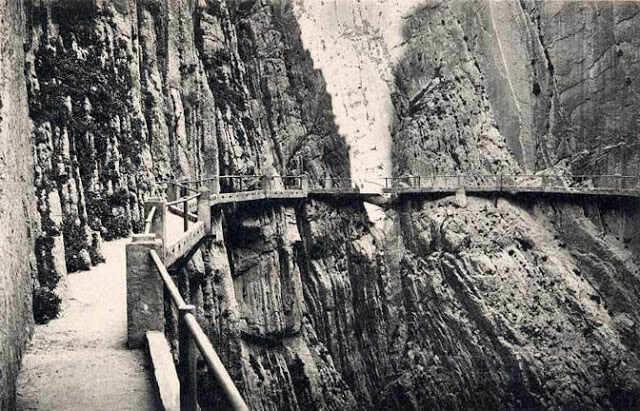
In the context of the hydroelectric project, the need arose to build a walkway to facilitate worker access and the transport of materials between different parts of the infrastructure. Thus, the Caminito del Rey was born, initially known simply as the King's Walkway. This walkway, approximately three kilometres long and suspended over 100 metres above the Gaitanes gorge, became a monumental engineering achievement of its time.
The name “Caminito del Rey” originated after the visit of King Alfonso XIII in 1921, who walked along the footbridge during the inauguration of the El Chorro dam. The monarch's presence underscored the strategic and symbolic importance of the work, elevating it to a new level of national recognition.
Design and Construction
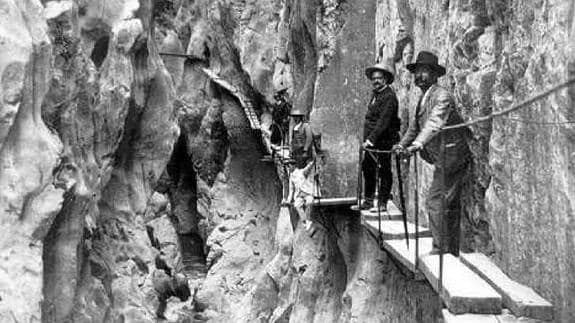
The design of the Caminito del Rey is a testament to the ingenuity of Benjumea and his team. The walkway, constructed with concrete slabs and supported by an iron structure anchored in the rock, stretched along the gorge, offering an impressive view of the natural landscape. Its construction required not only advanced technical skills but also a deep understanding of local geology and meticulous planning to ensure the safety of the workers.
One of the most notable aspects of the construction was the ability to overcome logistical and technical difficulties in such a challenging environment. Benjumea's team had to develop innovative methods for transporting and assembling materials at the dizzying heights of the gorge, once again demonstrating the mastery and dedication of the Sevillian engineer.
Impacto y Legado
The Caminito del Rey not only fulfilled its functional purpose by facilitating the construction and maintenance of the hydroelectric infrastructure, but also became a symbol of human ingenuity and the ability to transform nature in a harmonious and respectful way. For decades, the walkway served its original purpose, but over time, wear and tear and a lack of proper maintenance led to its deterioration, making it a dangerous challenge for the adventurers who dared to walk it.
In 2015, following an extensive restoration process that respected the original design while incorporating modern safety improvements, the Caminito del Rey reopened to the public, reborn as a world-renowned tourist attraction. This renaissance not only celebrated Benjumea's legacy but also revitalised the region, drawing in thousands of visitors and providing a significant economic boost.
The Figure of Rafael Benjumea
Rafael Benjumea was not only a brilliant engineer but also a visionary who understood the transformative power of infrastructure. His work on the Caminito del Rey is just one of many contributions he made throughout his career. He was also responsible for other significant projects, such as the construction of the Guadalhorce reservoir, which played a crucial role in the region's water management and agricultural development.
In addition to his technical achievements, Benjumea was a fervent advocate for the training and professional advancement of engineers, actively participating in various professional organisations and promoting collaboration and knowledge exchange. His legacy endures not only in the physical works he left behind but also in the inspiration he continues to provide to the generations of engineers who follow him.
Conclusion
El Caminito del Rey, a masterpiece suspended between the walls of the Gaitanes gorge, is a lasting testament to Rafael Benjumea’s ingenuity and determination. His vision and skills transformed a functional project into an architectural wonder that continues to astound those who traverse it. Benjumea not only left a tangible legacy in the form of impressive infrastructure but also an enduring lesson on the importance of innovation, perseverance, and respect for nature. With every step we take along El Caminito del Rey, we honour the memory of a true engineering pioneer.


